Subscription box fatigue? 7 strategies to audit and optimize your recurring purchases by 30% annually

Advertisements
Ever feel like your bank account is bleeding from a thousand monthly cuts? Implementing the right subscription fatigue strategies is no longer just a neat budgeting trick—it is a vital financial survival skill to reclaim your hard-earned money.
The convenience of recurring payments has quietly mutated into a massive drain on our wallets, leaving many of us paying for digital clutter we rarely use. Taming this membership overload is the fastest way to instantly boost your disposable income.
This guide delivers seven actionable ways to audit your automated billing and slash your ongoing expenses by 30% annually. Let’s dive in and take back control of your recurring costs today.
Understanding Subscription Fatigue: The Modern Financial Drain
Subscription fatigue emerges from the proliferation of recurring services, ranging from streaming platforms and software licenses to meal kits and beauty boxes.
This abundance, while offering convenience, often leads to consumers paying for services they rarely use or have forgotten about entirely.
The cumulative effect of these small, regular payments can unexpectedly inflate monthly budgets, creating a hidden financial drain. Many individuals are unaware of the total amount they dedicate to subscriptions until a comprehensive audit is performed.
Addressing this issue requires a clear understanding of its origins and impact. It is not merely about canceling services, but about re-evaluating their value and necessity in your daily life, making informed choices that align with your financial goals.
The Rise of the Subscription Economy
The subscription economy has fundamentally reshaped consumer habits, offering unparalleled access to goods and services with minimal upfront cost. This model, while beneficial, makes it easy to accumulate numerous recurring charges without fully grasping their collective impact.
Initially, a single subscription might seem negligible, but as these add up, the monthly bill can become substantial. This incremental cost accumulation is a primary driver of subscription fatigue strategies, pushing consumers to seek better management techniques.
The convenience factor often overshadows the financial implications, leading to a passive acceptance of ongoing payments. Recognizing this pattern is the first step towards taking control and implementing effective strategies to optimize spending.
Identifying Hidden Costs and Unused Services
Many consumers are surprised to discover subscriptions they no longer use or even remember signing up for. These dormant services represent direct financial waste, contributing significantly to overall spending without providing any current value.
Hidden costs can also arise from introductory offers that automatically convert to higher rates, or from services bundled with other purchases that are not actively required. A thorough review is necessary to unearth these overlooked expenditures and address them directly.
The challenge lies in the decentralized nature of these payments; they often come from different accounts or credit cards, making a unified overview difficult. Effective strategies must therefore focus on centralizing and scrutinizing all recurring charges.
Strategy 1: Conduct a Comprehensive Subscription Audit
The initial and most crucial step in combating subscription fatigue strategies is to perform a detailed audit of all your recurring payments. This involves meticulously listing every service you subscribe to, regardless of its cost or perceived importance.
Gathering this information from bank statements, credit card records, and digital payment platforms will provide a clear, consolidated view of your financial commitments. This process often reveals forgotten subscriptions and highlights areas for potential savings.
A thorough audit serves as the foundation for all subsequent optimization efforts. Without a clear picture of what you are paying for, it is impossible to make informed decisions about what to keep, adjust, or cancel.
Gathering All Recurring Payment Data
Begin by reviewing all bank accounts, credit card statements, and digital payment apps like PayPal or Apple Pay for the past 12 months. This extended period ensures that annual subscriptions, which might otherwise be missed, are also captured.
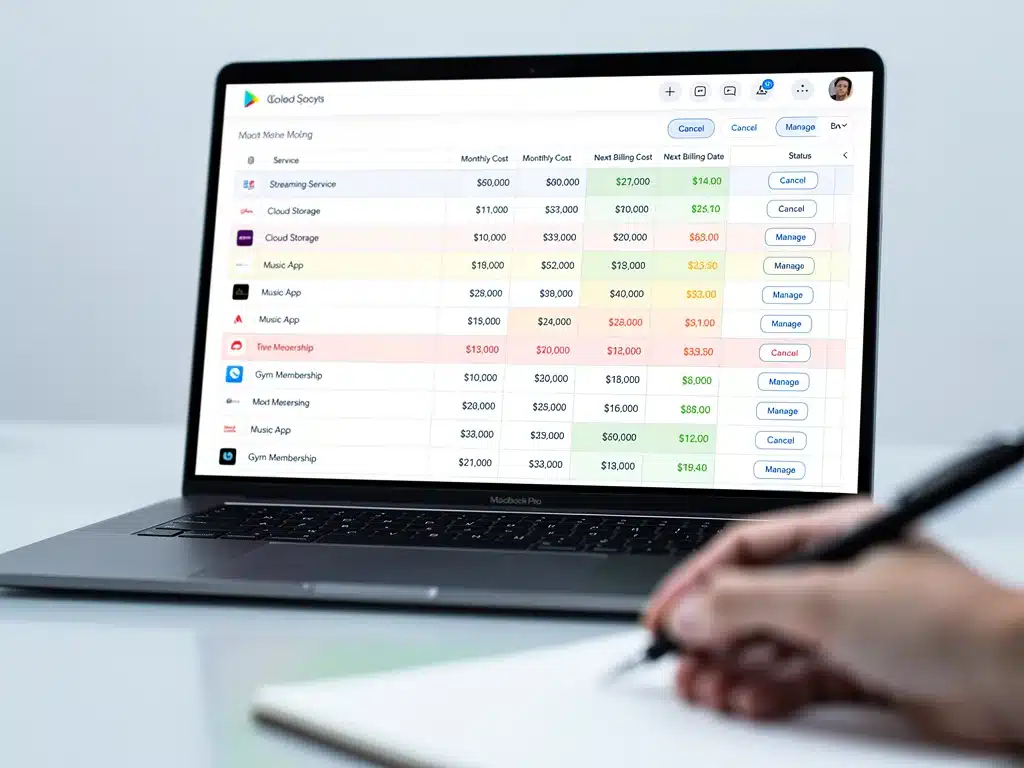
Look for any recurring charges, noting the service provider, the amount, and the frequency of the payment. Create a master list or spreadsheet to systematically track this information, including the date of the last payment and the next scheduled one.
This data collection phase is often the most revealing, as it consolidates fragmented information into a single, comprehensive overview. It’s common for individuals to uncover several unknown or forgotten subscriptions during this initial step.
Categorizing and Prioritizing Subscriptions
Once you have a complete list, categorize each subscription based on its type (e.g., entertainment, productivity, health, food). Then, prioritize them by their perceived value and necessity to your daily life.
- Essential Services: Subscriptions critical for work, health, or fundamental household needs.
- High-Value Services: Services you use frequently and derive significant enjoyment or utility from.
- Low-Value/Unused Services: Subscriptions you rarely use, have forgotten about, or no longer need.
This categorization helps in identifying immediate targets for cancellation or negotiation. It shifts the focus from simply having a subscription to assessing its actual contribution to your well-being and productivity.
Strategy 2: Evaluate Usage and Value Proposition
After compiling and categorizing your subscriptions, the next step is to critically evaluate the actual usage and value each service provides. This moves beyond simply knowing what you pay for, to understanding if it genuinely enriches your life.
Ask yourself tough questions about how often you use a service and what tangible benefits it delivers. Many subscriptions are maintained out of habit rather than necessity, leading to suboptimal spending and contributing to subscription fatigue strategies.
This evaluation phase requires honesty and objectivity, preventing emotional attachment to services from clouding financial judgment. The goal is to retain only those subscriptions that offer clear, consistent value.
Assessing Frequency of Use
For each subscription, consider how often you genuinely engage with it. For streaming services, track your viewing habits; for apps, monitor your login frequency; for physical boxes, assess if you consistently use all the items received.
If a service is used sporadically or less than once a month, it might be a prime candidate for cancellation or a downgrade. The cost-per-use metric can be a powerful indicator of a subscription’s true value.
Be mindful of seasonal usage patterns; some services might be more relevant during specific times of the year. For these, consider pausing or reactivating as needed, rather than maintaining continuous payments.
Determining True Value and Necessity
Beyond mere frequency, evaluate the qualitative value a subscription brings. Does it save you time, enhance your skills, provide unique entertainment, or fulfill a critical need? If the answer is ambiguous, its necessity might be questionable.
Consider alternatives: can you achieve similar benefits through free resources, one-time purchases, or a less expensive service? For instance, borrowing books from a library instead of an audiobook subscription may be a viable option.
The objective is to ensure that every dollar spent on subscriptions is an investment in something that genuinely improves your life, rather than a default payment for something that has become irrelevant.
Strategy 3: Negotiate, Downgrade, or Bundle Services
Once you have identified subscriptions that are underutilized or too expensive, explore options beyond outright cancellation. Many providers offer flexibility, allowing you to optimize your service without fully losing access.
Negotiating better rates, downgrading to a more affordable tier, or bundling services can significantly reduce costs. These approaches are effective subscription fatigue strategies that offer a middle ground between retaining and abandoning a service.
Being proactive in these discussions can yield substantial savings and ensure you’re getting the best possible deal for the services you genuinely want to keep.
Contacting Providers for Better Rates
Don’t hesitate to reach out to your service providers, especially for long-standing subscriptions. Many companies are willing to offer discounts or promotional rates to retain existing customers, particularly if you express an intent to cancel.
Mention competing offers or explain your budget constraints. Customer service representatives often have the authority to apply loyalty discounts or temporary price reductions that are not publicly advertised.
Even a small monthly reduction across several services can lead to considerable annual savings. This proactive step can transform a standard expense into a more cost-effective arrangement.
Exploring Downgrade Options and Bundles
Many subscription services offer various tiers with different features and price points. If you’re not utilizing all the premium features of a high-tier plan, consider downgrading to a more basic, cheaper option that still meets your core needs.
Additionally, look into bundling opportunities, either with the same provider or across different companies. For example, some telecommunication companies offer discounts when you combine internet, TV, and mobile services, or streaming platforms might partner for combined subscriptions.
These strategies allow you to maintain access to desired services at a lower cost, directly addressing the financial strain of subscription fatigue without complete deprivation.
Strategy 4: Leverage Free Trials and Set Reminders
Free trials are an excellent way to test new services without immediate financial commitment. However, they can also contribute to subscription fatigue strategies if not managed carefully, often leading to unintended charges after the trial period ends.
The key is to approach free trials strategically, ensuring you get the most out of the evaluation period and avoid automatic conversions to paid subscriptions. Setting timely reminders is paramount to this approach.
By being disciplined with free trials, you can explore new offerings without financial risk, making informed decisions about which services genuinely merit a recurring payment.
Maximizing Free Trial Benefits
When signing up for a free trial, aim to use the service extensively during the trial period to determine its true value and whether it integrates well into your routine. Don’t let a trial sit unused, only to be charged later.
Before the trial begins, make a note of the exact end date. Plan to make a decision—either cancel or commit—a few days before the trial expires, giving yourself ample time to act.
Some financial experts recommend using a virtual credit card number or a dedicated low-limit card for free trials. This can prevent unwanted charges if you forget to cancel before the trial period concludes.
Setting Timely Cancellation Reminders
To avoid accidental charges, set multiple reminders for each free trial’s expiration date. Use your smartphone’s calendar, a dedicated app, or even a physical planner to ensure you don’t miss the cancellation window.
Set the first reminder a few days before the trial ends, prompting you to evaluate the service and decide whether to continue. Set a second reminder for the day before the trial expires, as a final prompt to cancel if you choose not to proceed.
This proactive approach eliminates the stress and financial loss associated with forgotten free trials, transforming them into a valuable tool for informed consumer choices.
Strategy 5: Implement a Subscription Calendar or Tracker
Managing multiple subscriptions manually can be daunting, leading to missed cancellation dates and overlooked payments. Implementing a dedicated subscription calendar or tracker is a highly effective way to maintain oversight and combat subscription fatigue strategies.
These tools provide a centralized hub for all your recurring payments, offering a clear visual representation of due dates and costs. They empower you to stay organized and make timely decisions about your subscriptions.
Whether digital or physical, a reliable tracking system is indispensable for anyone looking to optimize their recurring expenses and prevent financial surprises.
Digital Tools for Subscription Management
Numerous apps and software solutions are designed specifically for tracking subscriptions. Services like Mint, YNAB (You Need A Budget), Truebill, and Rocket Money can automatically identify recurring charges from your bank accounts and credit cards.
These tools often provide features such as spending alerts, cancellation assistance, and negotiation services, helping you manage your subscriptions more efficiently. They offer a comprehensive dashboard that consolidates all your financial commitments in one place.
Leveraging these digital assistants can significantly reduce the mental load associated with managing multiple recurring payments, making it easier to identify and act on optimization opportunities.
Manual Tracking with a Spreadsheet
For those who prefer a hands-on approach or have fewer subscriptions, a simple spreadsheet can be equally effective. Create columns for the service name, monthly/annual cost, payment date, billing cycle, and cancellation instructions.
Regularly update this spreadsheet, perhaps once a month, to ensure accuracy. This manual process offers a clear overview and can be particularly useful for identifying patterns in your spending over time.
Regardless of the method chosen, consistency is key. A well-maintained tracking system provides the clarity needed to make strategic decisions about your subscriptions and avoid unnecessary financial drains.
Strategy 6: Consolidate and Eliminate Redundancies
A common outcome of subscription fatigue strategies is the accumulation of redundant services. For example, subscribing to multiple streaming platforms that offer similar content, or having several cloud storage solutions when one would suffice.
Identifying and eliminating these redundancies is a straightforward way to reduce recurring expenses without sacrificing functionality. This involves a critical review of what each service provides and whether its offerings overlap with another.
Consolidation not only saves money but also simplifies your digital life, reducing the number of accounts and passwords you need to manage, thereby improving overall efficiency.
Identifying Overlapping Services
Review your categorized list of subscriptions and look for services that perform similar functions. Do you have two music streaming services? Multiple news subscriptions covering the same topics? Several fitness apps with overlapping features?
Once identified, compare their features, content libraries, and costs. Determine which service provides the most comprehensive value for your needs and consider canceling the others.
This process might require a temporary adjustment in habits, but the long-term financial benefits and simplified experience often outweigh the initial inconvenience of switching or consolidating.
Choosing the Best-Value Alternative
When faced with redundant services, choose the one that offers the best value proposition. This isn’t always the cheapest option; it’s the one that best meets your specific needs and usage patterns.
Consider factors like content availability, user interface, offline access, family sharing options, and customer support. Sometimes, paying slightly more for a single, superior service is more cost-effective than maintaining multiple mediocre ones.
The goal is to streamline your subscriptions to a lean, efficient portfolio that maximizes utility and minimizes waste, directly combating the effects of subscription fatigue.

Strategy 7: Set a Strict Subscription Budget and Review Cycle
To prevent future subscription fatigue strategies and maintain long-term financial health, establish a strict budget for all recurring expenses. This proactive measure ensures that you allocate a specific amount to subscriptions and stick to it.
Alongside a budget, implement a regular review cycle for all your subscriptions. This creates a systematic approach to managing recurring payments, ensuring that they remain aligned with your financial goals and current needs.
These two strategies combined provide a robust framework for continuous optimization, preventing the gradual accumulation of unnecessary costs and fostering mindful spending habits.
Establishing a Monthly Subscription Cap
Based on your audit and optimization efforts, determine a realistic and comfortable monthly cap for all your subscriptions. This cap should align with your overall financial budget and savings goals.
Treat this cap as a non-negotiable limit. If you wish to add a new subscription, something else must be canceled or downgraded to stay within your allocated budget. This forces conscious decision-making and prevents impulsive sign-ups.
Communicate this budget to all household members who might incur subscription charges, fostering a shared responsibility for managing recurring expenses effectively.
Implementing Quarterly or Bi-Annual Reviews
Even after initial optimization, set a recurring schedule to review all your subscriptions. A quarterly or bi-annual check-up is advisable to ensure that services still meet your needs and that you are not paying for forgotten or unused items.
During these reviews, re-evaluate usage, value, and potential alternatives, just as you did during your initial audit. This continuous process keeps your subscription portfolio lean and optimized.
Regular reviews are crucial for adapting to changing needs and market offerings, ensuring that your spending remains efficient and prevents the re-emergence of subscription fatigue. This ongoing vigilance is key to sustained savings.
| Key Point | Brief Description |
|---|---|
| Comprehensive Audit | List all recurring payments to identify forgotten or unused services. |
| Evaluate Value | Assess actual usage and necessity of each subscription to ensure it provides true value. |
| Negotiate & Downgrade | Contact providers for better rates or switch to lower-tier plans. |
| Budget & Review | Set a spending cap and schedule regular check-ups to maintain optimization. |
Frequently Asked Questions About Subscription Management
Subscription fatigue refers to the feeling of being overwhelmed by the number and cost of recurring payments. It often leads to consumers paying for services they rarely use or have forgotten about, resulting in unnecessary financial drain and mental stress.
It is recommended to conduct a comprehensive audit of all your subscriptions at least once a quarter, or every three months. This regular review helps ensure that all services remain relevant, valuable, and within your established budget, preventing costs from creeping up.
Yes, many consumers find they can save 30% or more annually by implementing these strategies. This includes canceling unused services, negotiating better rates, and consolidating redundancies. The key is consistent application of the audit and optimization principles.
Popular digital tools like Mint, Truebill, Rocket Money, and YNAB can automatically track recurring payments from your bank accounts. For a manual approach, a simple spreadsheet can be highly effective for monitoring all your subscription services.
Absolutely. Many service providers, especially for long-term customers, are willing to offer discounts or promotional rates to prevent cancellations. It’s always worth a call or chat to inquire about better deals or loyalty programs before deciding to cancel a service.
What happens now
The rise of subscription fatigue strategies demands immediate action from consumers seeking financial control. The outlined strategies provide a clear, actionable roadmap to audit, optimize, and significantly reduce recurring expenditures.
By implementing a comprehensive audit, evaluating value, and strategically managing subscriptions, individuals can reclaim substantial portions of their annual income. This proactive approach not only saves money but also fosters a more mindful relationship with consumer spending.
Moving forward, it is crucial to adopt a continuous review cycle and maintain a strict subscription budget. This vigilance will ensure sustained savings and prevent the future accumulation of unnecessary recurring costs, empowering consumers in the evolving digital economy.
